
Don’t let insecurity or perfectionism keep you from sharing your work. Push through the revision, and let it fly. You can use the feedback to improve later!

What To Do When Editing Your Screenplay Isn't... Going Well
I am approaching several deadlines for first drafts and revisions and I’ll admit, this week I got overwhelmed. I often refer to my “TV Brain” and my “Playwriting Brain” when I talk about different ways I approach story and this week my Playwriting brain was on vacation. Out of office. She did not want to come out to play. But I had to revise my play. What’s a girl to do?
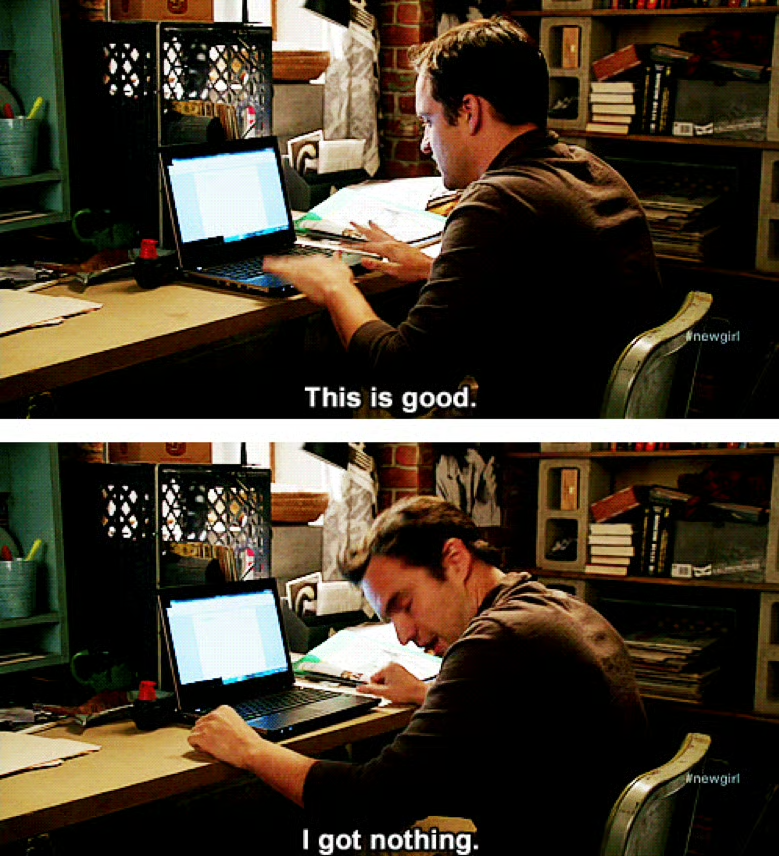
New Girl (Fox)
First I had to identify what my block actually was.
Was it imposter syndrome creeping in?
I often feel like a seasoned TV writer but a baby playwright. Due to lack of formal training and the flexibility of the medium I find it much harder to work on plays than screen projects. So was this my insecurity holding me back? Perhaps partially, but that wasn’t the real problem.
Was it lack of clarity on what I was writing?
I write plays without a thorough outline, just a skeleton, was that not going to work for a play like this? Lack of clarity was part of it, but heres where things started to make sense.
I knew what I needed clarity on but I didn’t have any idea to get it. It’s like, I know exactly where the pipe is leaking but I don’t have any tools to fix it. I was tapped.
There were other contributing factors to this, this month has been quite busy, so I’m a little mentally stretched and my problem solving ability isn’t at 100%. So what do I do in this situation?
I put the script down. Probably the hardest thing I’ve learned in my time as a writer is knowing when to step away from a script. Not forever, but for now (or forever, but that’s a different newsletter.)
This is usually the stage where if I keep revising and trying to fix it, without a clear plan of how to make it work, I’ll make the script worse and not better. I love this story so I don’t want to break it! Here’s what I did instead.
I assessed what actually HAD to get done before I turned it in. I want this to be good, since it’s an important project with collaborators I respect, but I had to remind myself this is a first draft I’m turning in. The draft I got notes on was draft zero, and even though I’m sharing this with people, it’s still a first draft!! Perfection is not the goal. The goal is for it to exist and make sense.This helped my mindset a lot, so I felt like I could reprioritize.
I reviewed the feedback I got on the script from draft zero that I want to address for this draft.
I narrowed it down to the most achievable parts, the aspects I currently have solutions for and focused on those.
Accepted (through gritted teeth) that the draft isn’t where I want it to be and trust the folks I’m sending it to will have insights that help it get there!
Once I share, take some time away from the piece for distance and a creative reset before diving back in.
I used to experience a lot of doubt and uncertainty in my screenwriting until I felt like I had a better handle on the medium. Now, since playwriting skills still feel underdeveloped, I have a panic attack any time a single sentence feels the slightest bit on the nose. But! There’s hope!
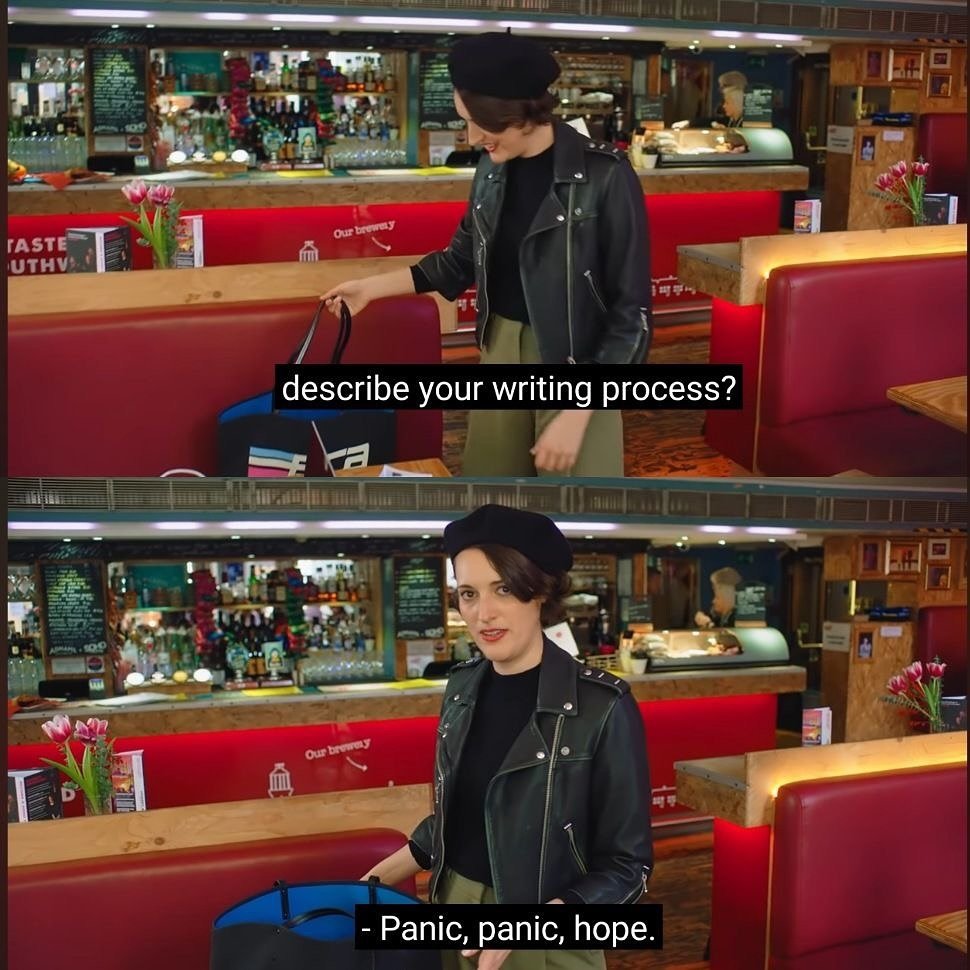
Phoebe Waller Bridge via Vogue
But the lovely thing about writing (in most mediums) is that there is always someone there to help you improve: A brilliant literary manager, a writers’ group, a friend, an executive, or an editor. This is why I value creative community so much! I know that what my brain can’t fully land on now (how to fix the leaky pipe) will be fixed once I let other brilliant minds into the process.
There’s this myth of the auteur in our business that can sometimes make writers feel like we should have all the answers on our own, but that’s just marketing. No one. And I mean no one. does anything. alone. in this business. And if they do, it’s highly likely that I don’t like their work.
Anyway, this long rambling message is to remind you to take a step back when you’re struggling with a draft and identify what the root cause actually is. Then identify what actually needs to get done in reality, and what are expectations you’re inventing that don’t really matter (just yet).
Don’t let insecurity or perfectionism keep you from sharing your work. Push through the revision, and let it fly. You can use the feedback to improve later!
OPEN TABS
Sundance Day 1: Indie Film Organizes to Stop the Merger Era (Ankler)
Take action to block the WBD merger (Future Film Collective)
Hollywood’s Studio Reckoning: On Radford Foreclosure (Stagerunner LA)