
TV isn’t just entertainment — it’s influence. Shows like Will & Grace helped reduce homophobia and shaped public perception of queer people by letting audiences form emotional connections with fictional characters over time, and expose them to people that may not be in their current social circles. Your stories matter more than you think! Here’s what I learned about this phenomenon (updated since the 7th grade):

🏳️🌈Happy Pride!!
Did you know TV can literally change your world view? I did a research project on this subject in the 7th grade and I’ve been obsessed with it ever since. It’s the reason I believe TV is such a powerful medium and why representation is so important, not just for the queer community, but for everyone.
TV isn’t just entertainment — it’s influence. Shows like Will & Grace helped reduce homophobia and shaped public perception of queer people by letting audiences form emotional connections with fictional characters over time, and expose them to people that may not be in their current social circles. Your stories matter more than you think! Here’s what I learned about this phenomenon (updated since the 7th grade):
Takeaway 1: Representation Resonates 🏳️🌈
“I think Will & Grace probably did more to educate the American public than almost anything anybody has ever done so far.”
— Then Vice President Joe Biden, in 2012
When Will & Grace premiered in 1998, it was the first major network sitcom to feature openly gay lead characters. It wasn’t just funny — it changed hearts and minds. The show introduced many Americans to queer characters they could relate to, empathize with, and root for, and they grew attached to them over time. The reason for this is Parasocial Contact and Cultivation Theory!
🧠 The Science Behind the Shift
There are two primary psychological theories behind this.
Parasocial Contact Hypothesis
Coined by Edward Schiappa and colleagues, says that seeing positive portrayals of marginalized groups on screen can reduce real-world prejudice — even if it’s only through fiction. These applies even beyond Will & Grace—anyone remember Jack in Dawson’s Creek??
“Participants who reported stronger parasocial connections with Will or Jack also reported lower levels of sexual prejudice.”
(Edward Schiappa, Peter B. Gregg, & Dean E. Hewes via Research Gate “Can One TV Show Make a Difference?”)
Audiences don’t just watch — they bond. These "one-sided" relationships with queer characters can break down stereotypes and build empathy. And this has been a consistently studied phenomenon.
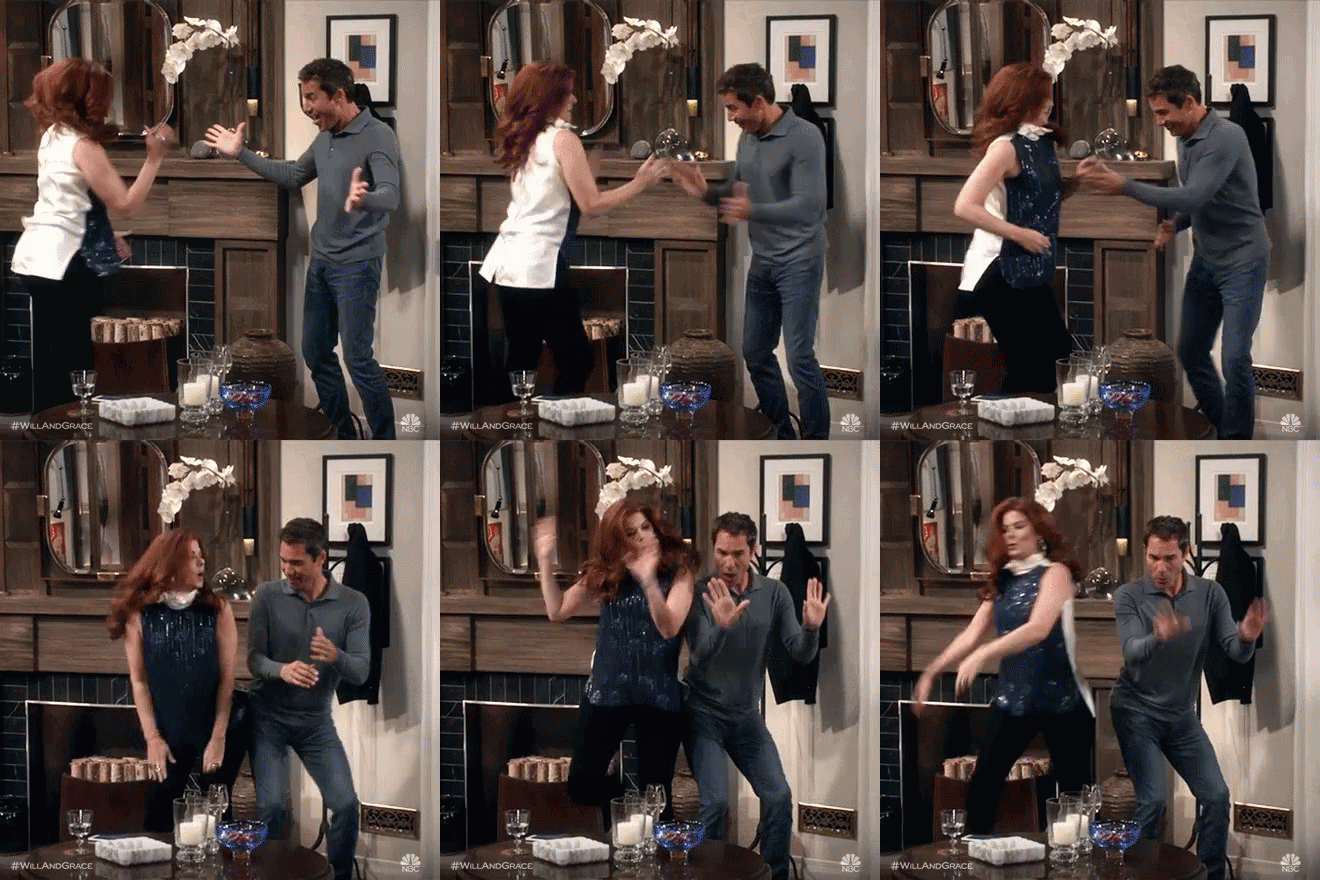
New Girl (Fox)
Cultivation Theory?
Cultivation Theory was developed by media scholar George Gerbner in the 1970s and basically says the more time people spend watching television, the more likely they are to believe that the world presented on TV reflects real life — even if that world is exaggerated or fictional.
Why Queer Representation Matters 🏳️🌈
When queer characters are portrayed with humanity, and depth, especially over time (we’re talking multi-season shows), audiences start to internalize those depictions as part of the norm. So, viewers who may have little or no real-life contact with Queer people are still forming opinions based on what they see on screen.
Positive representation can literally “cultivate” empathy and reduce prejudice — especially for viewers who don't have personal exposure to queer individuals.
Takeaway 2: The Impact of Representation is Measurable
We’ve got receipts to back this up, y’all. A 2006 study applying cultivation theory found that:
“Repeated exposure to non-stereotypical depictions of gay characters on Six Feet Under significantly improved viewers’ attitudes toward gay men.”
(Source: Bond & Compton, Journal of Broadcasting & Electronic Media)
A study of 245 college students found a direct link between watching Will & Grace and lower levels of sexual prejudice. And the ripple effects extended beyond one show, and beyond general “acceptance” to views on civil liberties.
“Media portrayals of lesbian women and gay men... helped many Americans understand that LGBTQ+ individuals deserve equal rights.”
(Source: Scholars.org)
🌍 Takeaway 3: This is Global!
From Six Feet Under to Queer Eye, or breakouts like Rebélde, Sex Education, Derry Girls or Elité, international audiences also absorbed more diverse and nuanced portrayals of queer people, especially among younger viewers. The narrative that your story “won’t travel” is bullshit, and can have a huge impact across borders.
Researchers applying cultivation theory found that screening episodes of Six Feet Under over five weeks improved attitudes toward gay men among viewers. (Wiley) Another study engaging Flemish viewers revealed that audiences across Europe read queer representation in shows like Six Feet Under as powerful tools of resistance to heteronormative norms
TLDR; So, Why This Matters for Writers?
If you're a TV writer or creator, you’re not just crafting a story — you’re shaping cultural attitudes. When we commit to telling authentic stories, diversifying writers rooms and casts, we can help move the needle for marginalized communities all over the world.
I’m not saying every writer has to be an activist in their work, not at all, but it is important to know the impact our work has (whether intentional or not). Especially because our writing can change things for the good, but can have the adverse affect if we don’t write with intention and authenticity. There is a level of social responsibility we take on with the knowledge that our work can change someone’s worldview. I find that empowering and exciting—to know how I can support and fully represent a diverse array of experiences as an ally in writers rooms and in my own work.
This Pride Month, and every month, remember: Your stories matter.
Keep pushing for complex, joyful, messy, triumphant queer characters. Normalize queer joy. Center queer lives and entertain the hell out of yourself and others 🙂
And next time someone (including your inner critic) says creating TV and Film or any kind of media isn’t “useful” or “helpful to society” remind them that TV doesn’t just reflect society — it helps shape it.
Pride Month Watches:
Will & Harper ( 2024, Documentary, Netflix)
The Birdcage (1996, Mike Nichols, Prime Video)
The Half of It (2020, Alice Wu, Netflix - Also Saving Face on Criterion!)
The Queen of My Dreams (2023, Fawzia Mirza)
Bottoms (2023, Emma Seligman, Prime- and Shiva Baby on Netflix)
Joyland (2023, Saim Sadiq)
Buccaneers (TV, Apple TV+)
P-Valley (TV, Starz)
Sex Education (TV, Netflix)
Sort Of (TV, HBO Max)
The Society ( TV, Netflix)
Sense 8 (TV, Netflix)
We’re Here (HBO Max, Docu-series)
Of course there are a few Oscar and Emmy Winners and current standouts I assume you’re familiar with—Heartstopper, Moonlight, Pose, Schitt’s Creek, Everything Everywhere etc etc—all fantastic.
Open Tabs
How Much Are You Worth Romantically? This Director Has Thoughts.(Celine Song on Materialists)
How I’m Fixing My Broken Attention Span (Vulture)
HOW EVERYTHING LOOKS KIND OF LIKE “ART” - @Ghostinthesam
On clashing political views of fans & Star Wars’s Andor - @ourcrazystupidpodcast
Classic Plays to read or watch during Pride Month - Expand The Canon (Full Disclosure, I work here haha)
ICYMI: Industry Reads
Queer TV is Crashing Out (The Ankler)
Producer Sarah Schechter: 'We Might Be in Hollywood's Panic Attack' (The Ankler)
Battle of the Cool Kids: Inside the A24, Neon and Mubi Turf War (THR)